Showing posts with label Ukraine. Show all posts

22 February 2015

Rebels order weapons pull-back as Ukraine say armor arriving

 
A fighter
A fighter with the separatist self-proclaimed Donetsk People's Republic army sits in front of a sign reading 'Ukrainian over all' at a check point in Debaltseve, February 20, 2015.
Credit: Reuters/Baz Ratner

Pro-Moscow rebels said they would start to withdraw heavy weapons from the front line in eastern Ukraine on Sunday but the government in Kiev said armored columns had crossed the border from Russia to reinforce the separatists.
The Ukrainian military said the rebels were pressing on with attacks on government forces near Mariupol, a port in government hands that is seen as the rebels' next major target.
Spokesman Andriy Lysenko said a military train carrying 60 armored vehicles including tanks had arrived in the town of Amvrosiivka from Russia on Saturday. A convoy of military equipment had later crossed the border near Novoazovsk, east of Mariupol on the Sea of Azov.
He said fighting was in progress at the village of Shyrokyne, east of Mariupol.
"The fight continues. Our soldiers are holding their positions," Lysenko said, adding that there had been a total of 44 attacks by separatists across the conflict zone in the past 24 hours.
In the city of Kharkiv, three people were killed and 10 wounded on Sunday when an explosive device was thrown from a car into a crowd attending a peace rally, a Ukrainian regional prosecutor said.
The blast, which police called a terrorist act, occurred near a metro station as a crowd of participants in the rally passed by.
A pro-Russian rebel commander said the separatists were due to begin pulling back heavy weapons from the frontline in eastern Ukraine on Sunday, a sign that the rebels may be prepared to halt their advance as part of an internationally brokered peace deal.
Fighting has eased in many areas since a ceasefire came into effect a week ago, but the truce was shaken by the rebel capture on Wednesday of the town of Debaltseve, forcing thousands of Ukrainian troops to retreat.
HEAVY WEAPONS
But moves towards pulling back heavy weapons, together with the exchange of dozens of prisoners with Ukrainian government forces on Saturday, could indicate the rebels intend to observe the truce more fully, having achieved a military objective by seizing Debaltseve.
"The plan was signed last night ... Starting from today there are two weeks to withdraw heavy weapons," Interfax news agency quoted rebel commander Eduard Basurin as saying.
Another Russian news agency, TASS, quoted him as saying the pull-back was still being organized and that the actual withdrawal of weapons would take place from Tuesday.
For the Ukrainian side, Lysenko said there was no confirmation yet as to whether the rebels had started pulling back their weapons.
A Reuters witness saw a 20-vehicle convoy of separatist military trucks with anti-aircraft missile systems and howitzers leaving Debaltseve in the direction of Donetsk.
An attack on Mariupol, a city of half a million people and potentially a gateway to Crimea, which Russia annexed last March, would almost certainly kill off the ceasefire.
On Saturday, government forces and rebels exchanged nearly 200 prisoners, one of the first moves to implement the peace deal reached on Feb. 12 in the Belarussian capital Minsk after the French, German, Russian and Ukrainian leaders met in an attempt to end the 10-month-old conflict.
Both sides continue to accuse each other of violating the ceasefire.
The Ukrainian military said rebels had launched 12 attacks on government troop positions overnight, using artillery and mortar fire.
The town of Pesky near Donetsk had seen the most intense fighting, while separatist groups had attempted to storm Ukrainian positions in Shyrokyne, east of the port city of Mariupol on the Sea of Azov, the military said on Facebook.
Kiev accuses the separatists of building up forces and weapons in Ukraine's southeast and has said it is braced for the possibility of a rebel attack on Mariupol.
The rebel press service DAN said Ukrainian troops had been shelling parts of Donetsk, reporting that artillery fire could be heard in the city in the early morning.

Original post found here: http://www.reuters.com/article/2015/02/22/us-awards-oscars-idUSKBN0LQ0FT20150222

14 February 2015

Ukraine crisis: Poroshenko says peace deal in danger

Ukraine crisis: Poroshenko says peace deal in danger

The Ukrainian president has warned a deal to end the war in the east is in "great danger" after heavy fighting ahead of Saturday night's ceasefire.
Petro Poroshenko also accused Russia of "significantly increasing" its offensive in spite of the peace agreement reached in Minsk on Thursday.
Meanwhile, the US said it was very concerned by reports of heavy weapons coming across the border from Russia.
More than a dozen civilians are said to have died in shelling on Friday.
It is unclear who was behind the shelling but both the Ukrainian military and pro-Russian rebels in the eastern Donetsk and Luhansk regions accuse each other of targeting residential areas.
In New York, the UN Security Council will on Sunday meet for an emergency session to discuss the implementation of the ceasefire deal.
The presidents of France, Russia and Ukraine as well as the German chancellor - who clinched the agreement in the Belarusian capital - are also expected to discuss the issue by phone over the weekend.
'Escalation expected' With less than 24 hours until the ceasefire is due to take effect, correspondents say the fighting shows no sign of stopping.
The fiercest battles have been around Debaltseve, a strategic town in between rebel-held areas.
Ukrainian Deputy Defence Minister Petro Mekhed said the rebels wanted to "raise their flag" over Debaltseve and the key port city of Mariupol before the midnight ceasefire (22:00 GMT) kicked in.
"Ukraine is expecting an escalation and taking all necessary measures to be able to respond," Mr Mekhed told reporters.
Rebels prepare to head into battle against government forces near the town of Debaltseve - 13 February 2015
Rebel fighters have continued to besiege the government-held town of Debaltseve
 
A resident looks out of her damaged windows after shelling in a residential area of Artemivsk in eastern Ukraine - 13 February 2015
young child was killed in Artemivsk in what the local authorities said was shelling by rebels
A Ukrainian serviceman loads ammunition into a tank in territory controlled by Ukraine's government in the Donetsk region - 13 February 2015
Government forces were also reported to have retaken a number of villages around Mariupol
 
Ukrainian President Petro Poroshenko (left) with Prime Minister Arseniy Yatseniuk at a military training base outside Kiev - 13 February 2015
President Poroshenko said despite the agreement there was a "long way to go to peace"
Rebel shelling killed two people in a cafe in Shchastya, near Luhansk, on Friday as well as a young child near a school in Artemivsk, a town near Debaltseve, according to Kiev-controlled regional authorities.
Meanwhile, the rebels said at least six people had died in shelling in the city of Donetsk and town of Horlivka. The rebels accuse government forces of shelling the towns.
"After what we achieved in Minsk this is not just shelling of Ukrainian civilians and residential neighbourhoods - this is an attack on our Minsk achievements, without any explanations," President Poroshenko said.
"Unfortunately, after Minsk, Russia's offensive operations have intensified," he said, before adding: "We are still convinced that the Minsk achievements are in a big danger."
There were also reports of a government offensive near Mariupol, the city between rebel-held eastern areas and the southern Crimea peninsula, which was annexed by Russia last March.
'Serious live fire' The new clashes have fuelled fears that the peace deal agreed in the Belarusian capital could fall through before the ceasefire starts.
The group responsible for monitoring the ceasefire said it remained hopeful despite there being "quite serious live fire" in several areas on Friday.
"We feel that the Minsk agreements are really the only available roadmap to a sustainable ceasefire," Michael Bociurkiw, spokesman for the OSCE, told the BBC.
line
The latest Minsk agreement:
  • Ceasefire to begin at 00:01 local time on 15 February (22:01 GMT 14 February)
  • Heavy weapons to be withdrawn, beginning on 16 February and completed in two weeks - beyond a buffer zone behind the current front line for Ukrainian forces and behind the September front line for separatist forces
  • All prisoners to be released; amnesty for those involved in fighting
  • Withdrawal of all foreign troops and weapons from Ukrainian territory. Disarmament of all illegal groups
  • Ukraine to allow resumption of normal life in rebel areas, by lifting restrictions
  • Constitutional reform to enable decentralisation for rebel regions by the end of 2015
  • Ukraine to control border with Russia if conditions met by the end of 2015
line
Pro-Russian rebels signed the peace agreement but key issues remain to be settled, including the situation in Debaltseve.
European leaders have warned Russia that it could face additional sanctions if the agreement is not respected.
German Chancellor Angela Merkel said the deal offered "a glimmer of hope", but warned: "It is very important that words are followed by actions."
Map
Ukraine and the West accuse Russia of supplying weapons and personnel to the rebels but Russia denies this.
Officials say more than 5,400 people have been killed since the conflict began, but the UN believes the actual death toll to be much higher.
There has been a dramatic rise in casualties in recent days, with 263 civilians killed in populated areas between 31 January and 5 February.

Original post found here: http://www.bbc.com/news/world-europe-31463007

12 February 2015

Ukraine cease-fire deal announced after marathon Minsk talks

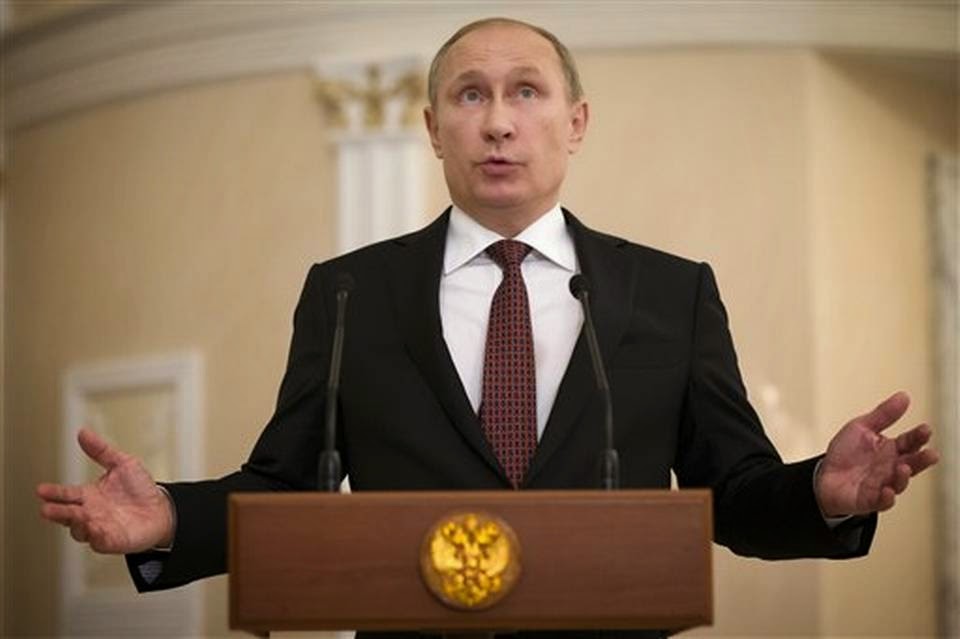
Russian President Vladimir Putin
Reports of fighting erupting amid Ukraine peace deal
Russian President Vladimir Putin announced a cease-fire agreement for eastern Ukraine had been reached Thursday, bringing an end to marathon talks between the leaders of Ukraine, Russia, Germany and France.
The agreement is due to take effect at midnight Sunday (4 p.m. ET Saturday), but questions remain about whether the deal will hold up after the collapse of a previous cease-fire in September. French President Francois Hollande called the agreement a "serious deal" in comments to the BBC, but noted that not every issue had been resolved. Hollande said that he and German Chancellor Angela Merkel were committed to helping verify the cease-fire process.
In one potential area of disagreement, Putin said that he and his opposite number, Ukraine's Petro Poroshenko disagreed on assessing the situation in the government-held town of Debaltseve. The town is a key transport hub between Donetsk and Luhansk, the two major cities controlled by Moscow-backed separatist rebels, and has been the focus of intense fighting in recent weeks as the rebels sought to encircle the Ukrainian troops there.
Putin said that the rebels consider the Ukrainian forces surrounded and expect them to surrender, while Ukraine disagrees with that. Putin added that they agreed with Poroshenko to clarify the situation, and urged the warring parties to show restraint.
For his part, Poroshenko said that all parties agreed to help Ukraine reclaim control of the border with Russia, some of which is now controlled by the rebels. Poroshenko also told reporters that that heavy weaponry will be withdrawn from the front lines by both sides between 31 and 43 miles in the next two weeks.
The line of division and other key provisions were contained in a document endorsed by rebel chiefs and the representatives of Russia, Ukraine and the Organization for Security and Cooperation in Europe (OSCE). That agreement was endorsed by the four leaders, who issued a separate declaration.
Poroshenko also said that no agreement had been reached on the issue of greater autonomy for the rebel-held areas of eastern Ukraine. The separatists' early demands for a federalized Ukraine culminated in a May independence referendum.
"We were presented with various unacceptable conditions of withdrawal and surrender," Poroshenko said. "We did not agree to any ultimatums and stated firmly that the cease-fire that is announced is unconditional."
Poroshenko also said the documents signed envisage the withdrawal of all foreign troops and militants from Ukraine -- a reference to the soldiers and weapons that Ukraine and the West say Russia has sent into eastern Ukraine to back the rebels. Moscow has denied the accusations, saying Russians in eastern Ukraine were volunteers, but the sheer number of sophisticated heavy weapons in rebels' possession belies the denial.
The talks in the Belarusian capital, Minsk, had lasted for 16 hours before the cease-fire was announced.
"It was not the best night in my life," Putin told reporters, "but the morning, I think, it is good because we have managed to agree on the main things despite all the difficulties of the negotiations."
"We came to an agreement, an agreement on a cease-fire and on a global political settlement of the Ukrainian conflict," Hollande said. "That global settlement will include all issues, from the cease-fire to the control of the border, to decentralization, and, of course, the pullback of heavy weapons and resuming economic relations."
Hollande also praised Putin for applying "pressure as much as necessary on the separatists."
Meanwhile, both sides reported fighting across eastern Ukraine Thursday, as the conflict the U.N. says has killed over 5,300 people since this past April ground on.
The talks had been given added urgency by an increase in bloodshed in recent weeks, as well as rising calls by U.S. lawmakers to provide Kiev's forces with so-called lethal aid. European leaders, led by Merkel, fear that increased weapons shipments would only aggravate the fight. Russia, meanwhile, faces a severe economic downturn driven in part by sanctions the West has imposed for supporting the separatists with troops and equipment, which Russia vehemently denies it is doing.
Merkel, Putin, Poroshenko and Hollande first sat down with each other Wednesday evening as crowds of reporters waited anxiously in a marble-floored, chandeliered convention hall.
Before heading to Minsk, Russia Foreign Minister Sergey Lavrov said the most important goal of the talks would be to implement a cease-fire, but warned that Ukraine could fully re-establish its control over the border with Russia only if it offers a degree of autonomy to the east and lifts its economic blockade.
"To give away the Russian part of the border also would be to cut them (the rebels) off even from humanitarian help and allow them to be surrounded," Lavrov said.
Meanwhile, in Donetsk, rebel officials said five people were killed and nine wounded in a shelling attack on a bus station on Wednesday. Officials in Kiev said 19 troops were also killed in fighting in Debaltseve, a hotly contested transport hub in eastern Ukraine.
Poroshenko posted a statement saying he had made an impromptu visit early Wednesday to the eastern Ukrainian city of Kramatorsk, where Kiev says 16 people were killed and 48 wounded in a rocket strike a day earlier. The city is 30 miles from the nearest front line.

The Associated Press contributed to this report.

10 February 2015

Rebels claim to encircle Ukraine troops in Debaltseve

The rebels have been trying to seal off the strategic town of Debaltseve

Pro-Russian rebels in Ukraine say they have encircled the town of Debaltseve - but Ukraine says its troops are still fighting along a supply road. The strategic town is a key railway junction and has been the focus of intense fighting for more than a week.
Ukrainian officials said at least nine soldiers and seven civilians had died in fighting in the town since Sunday.
Earlier, US President Barack Obama said he had not ruled out supplying arms to Ukraine if diplomacy failed.
Russia had violated "every commitment" in a truce deal, he said, after meeting German Chancellor Angela Merkel.
Mrs Merkel is opposed to sending weapons to the warring sides.
She has been briefing Mr Obama on a new peace deal for the conflict in Ukraine's east.
Russia has denied accusations of sending troops and supplies to re-enforce the rebels battling Ukrainian forces.
'Demilitarised zone' The rebels said on Monday that they had cut off a key supply road to Debaltseve, which is near the rebel-held city of Donetsk. However, Ukraine's military told the BBC that the battle was continuing.
 Pro-Russian separatist fighter jumps from an armoured vehicle near a destroyed Ukrainian tank in Uglegorsk, 6 kms southwest of Debaltseve on 9 February 2015 Mrs Merkel's US trip is the latest in a flurry of diplomatic activity to try to end nearly a year of conflict in Ukraine
Military spokesman Olexandr Matuzyanyk told the BBC "there is fighting going on for this road at the moment".
Thousands of Ukrainian troops are believed to be in Debaltseve and the surrounding area. Heavy fighting has been raging there for more than a week, with the rebels gaining some ground.
The crisis in Ukraine has already claimed more than 5,300 lives and displaced 1.5 million people.
Map of Ukraine rebel-held areas
Mrs Merkel met the US president in Washington on Monday to update him on Franco-German efforts to revive last year's Minsk peace plan, which collapsed amid fighting over the winter.
The detailed proposals have not been released but the plan is thought to include a demilitarised zone of 50-70km (30-45 miles) around the current front line.
Four-way talks between Russia, Ukraine, Germany and France are due to be held in Belarus's capital Minsk on Wednesday to discuss the proposals.
'One option' Speaking alongside the German chancellor, President Obama said the option of "lethal defensive weapons" for the Ukrainian government remained on the table.
"If, in fact, diplomacy fails, what I've asked my team to do is to look at all options," he said, adding that offering lethal arms was only one of the options under consideration.
Mrs Merkel, who has made it clear she opposes sending lethal arms, acknowledged setbacks in efforts to reach a diplomatic solution with Russia over Ukraine, but said that they would continue.
Pro-Russian separatist fighters stand on 9 February 2015 on a road near Uglegorsk, 6 kms southwest of Debaltseve. Much of the recent fighting has taken place around Debaltseve - a key piece of territory in the east
Meanwhile Mr Obama criticised Russian aggression in Ukraine, saying that the borders of Europe could not be "redrawn at the barrel of a gun".
Russian action had reinforced the unity of the US and its European allies, he added.
EU foreign ministers in Brussels agreed on Monday to impose further sanctions against Russian and rebel officials, but have put them on hold for a week to give peace efforts a chance.
Russian President Vladimir Putin, who is also considering the peace proposals, earlier blamed the West for causing the crisis, saying they had broken pledges not to expand Nato and forced countries to choose between them or Russia.
In comments to an Egyptian newspaper, Mr Putin accused Western states of supporting a "coup d'etat in Kiev" - a reference to the ousting of former Ukrainian President Viktor Yanukovych last year.
People walk with their belongings on February 7, 2015 in the eastern Ukrainian town of Vuglegirsk in the Donetsk region Many civilians have fled the Donetsk fighting
 

07 February 2015

Germany balks at Ukraine appeal for arms to fight rebels

Vice President Joe Biden is backing the German-French diplomatic push to calm the crisis in Ukraine, but says as long as Moscow continues its current course, the international community will continue to impose costs on Russia. (Feb. 7) AP

Ukraine crisis: Leaders to put plan to Poroshenko

 
James Reynolds in Donetsk: "Rebels here have been building up the trappings of a state, they've got their own flags, border crossings and police".

06 February 2015

Ex-NATO chief warns Putin could attack Baltics as Ukraine, rebels reach humanitarian deal


NATO's former secretary-general has warned that Russian President Vladimir Putin could engineer a Ukraine-style intervention in one of the Baltic republics as the leaders of France and Germany flew to Moscow to make a last-ditch bid for peace in eastern Europe.
Anders Fogh Rasmussen told Britain's Daily Telegraph Thursday that Putin's goal was to reassert Russian dominance of Eastern Europe by testing, and ultimately fracturing the West's bedrock Cold War alliance.
"There is a high probability that he will intervene in the Baltics to test NATO's Article 5," Rasmussen said, referring to the section of NATO's charter mandating that other member states come to the defense of a fellow member under armed attack. "Putin knows that if he crosses the red line and attacks a Nato ally, he will be defeated. Let us be quite clear about that. But he is a specialist in hybrid warfare."
All three of the so-called Baltic republics -- Estonia, Latvia, and Lithuania -- were part of the Soviet Union until its dissolution in 1991. All three joined NATO in 2004. All three also have sizable minority populations of ethnic Russians. Rasmussen says his fear is that Moscow will generate a conflict under murky pretenses, In the case of Ukraine, the fall of the pro-Moscow president Viktor Yanukovych prompted Russia's annexation of Crimea and a bloody civil war between Kiev's new pro-Western government and separatist rebels thought to be trained and equipped by Russia's military.
Article 5 has been invoked only once in NATO's 66-year history, by the U.S. after the September 11, 2001 attacks. It is not clear what would happen if a NATO member claimed Article 5 protection, but was turned down by the NATO council.
Rasmussen added that many of NATO's European member nations have slashed military spending to such an extent that they cannot defend themselves without U.S. help.
"Nato countries have cut defense spending by 20 percent in real terms over the last five years – and some by 40percent - while Russia has increased by 80percent. The aggression in Ukraine is a wake-up call," Rasmussen said.
"We learned in the Libyan crisis that Europe is totally reliant on the Americans for air-refueling, drones, and communications intelligence. We don’t have air transport. It is really bad."
Meanwhile, in Ukraine itself, the rebels reached an agreement Friday with government forces on a humanitarian corridor to evacuate civilians from the epicenter of fighting on Friday.
Rebel leaders said the agreement would allow the evacuation of civilians from Debaltseve, a key railway hub that has become the focus of fighting in recent weeks because of its strategic location. It wasn't immediately clear where the evacuees would go.
  The cease-fire around Debaltseve held Friday as a convoy of several dozen buses drove from nearby Vuhelhirsk toward Debaltsevo, where a shrinking population has been trapped in cross-fire and left without power, heating and running water for almost two weeks. Half-way to Debaltsevo, the convoy's movement was stopped by concrete blocks, apparently intended to block military vehicles from using the road.

  German Chancellor Angela Merkel and French President Francois Hollande are set to hold talks with Russian President Vladimir Putin in the Kremlin a day after discussing their proposals with Ukrainian President Petro Poroshenko. In a sign of the importance of the initiative, this will be Merkel's first trip to Moscow since Ukraine's conflict broke out last year.

  The fighting in eastern Ukraine between Russia-backed separatist rebels and Ukrainian forces has intensified sharply over the past two weeks. Russia vehemently denies that it is backing the insurgency with troops and weapons, but U.S. Secretary of State John Kerry rejected that denial on Thursday's visit to Kiev.

  More than 5,300 people have been killed since the separatist insurgency flared up in eastern Ukraine in April following Russia's annexation of Ukraine's Crimean Peninsula.
The Associated Press contributed to this report. 

Original post found here: http://www.foxnews.com/world/2015/02/06/ex-nato-chief-warns-putin-could-attack-baltics-as-ukraine-rebels-reach/

05 February 2015

Democrats, Republicans urge Obama to arm Ukraine

Ukrainian Grad BM21 multi-rocket launcher rides near Artemivsk on February 5, 2015
Washington (AFP) - US senators from both parties renewed calls Thursday for President Barack Obama to boost military aid to Ukraine, while criticizing Europe's approach to the crisis.